
LinkedIn Patches #66 Answer & Analysis
Stuck on LinkedIn Patches #66? Get spoiler-friendly Patches hints, the final grid solution, and a clear step-by-step explanation for today’s LinkedIn Patches puzzle.
This page includes the final answer and full analysis for LinkedIn Patches #66. Use the hints first if you want to solve the puzzle before revealing the answer.
LinkedIn Patches #66 Hints
In today's LinkedIn Patches puzzle, the largest numbers usually become easier once you look at the borders and corners. Any patch with a lot of cells needs a region with enough uninterrupted space.
The top row is heavily constrained, so it is one of the first places to test. In grid solutions like this, a wide patch on the edge often has very few possible shapes.
The far-right side is another strong anchor. A tall patch on the edge can often only fit one connected shape, which helps separate the board into smaller sections.
The 2-cell patches in LinkedIn Patches #66 are useful because they block off space that larger patches cannot use. Place them where the remaining room is most limited.
Once the upper regions are set, the middle of the board naturally splits into left and right zones. That split is usually the key to finishing today's Patches solution cleanly.
After the forced edge placements, the remaining open cells should form a neat rectangle or strip. If you avoid isolating cells early, the last 6-cell and 4-cell patches become much easier to place.
Still Stuck? Click on Reveal Patches #66 Answer below.
LinkedIn Patches #66 Answer
Original Puzzle
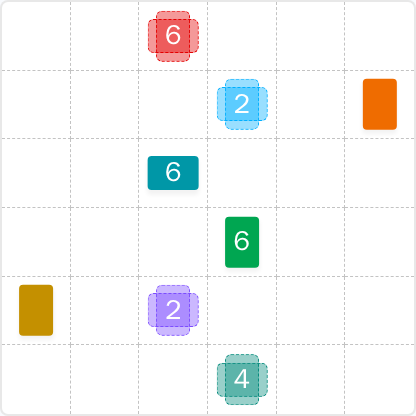
Final Answer
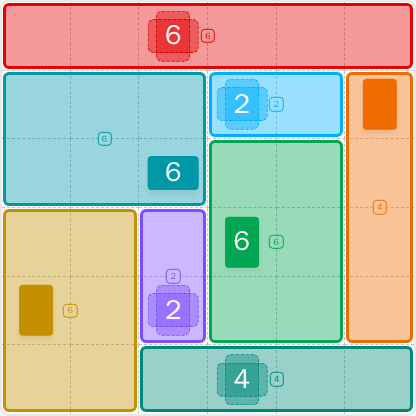
How to Solve LinkedIn Patches #66
Previous Patches Answers
Play Unlimited Patches Games
Enjoy unlimited Patches and other puzzle games anytime. No daily limits, just endless fun!
Play Now - Unlimited GamesMore LinkedIn Games Answers for May 22, 2026


Patches #66 FAQ
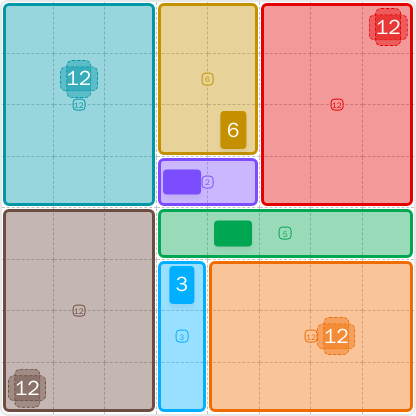
The LinkedIn Patches answer for 2026-05-22 15:00:13 is the solved layout shown on this page. The final grid uses a full top-row 6 patch, an upper-left 6 patch, a right-edge 4 patch, two 2-cell patches, and the remaining 6-cell regions to finish the board.
Use an edge-first approach. Start with the most restricted patches, then place the small 2-cell regions, and finish with the larger connected blocks. That is the fastest way to read today's LinkedIn Patches puzzle.
The best Patches hints point to the top row, the far-right edge, and the central divider. Those areas are the most constrained and usually unlock the rest of the grid solutions.
Each number tells you how many cells the patch must contain. Every patch must stay connected, not overlap another patch, and the whole board must be filled.
R means row and C means column. So R2C7 means row 2, column 7, counted from the top-left of the grid.
Look for forced edge placements first, then reserve space for the larger patches before filling the middle. That method makes today's Patches solution much easier to complete.
This page is designed as a daily LinkedIn Patches answer page, so it can include the full solved grid, a short Patches puzzle guide, and quick-reference Patches solutions for each date.